
Physics and Engineering







Studying physics and engineering is about more than solving equations. It's about making discoveries and developing devices that will change the world.
The Department of Physics and Engineering has a tradition of excellence and a strong national reputation. We offer flexible physics and engineering degree programs, cutting-edge research opportunities, a successful alumni network, and caring professors who are committed to mentoring students.
Majors, Minors, and Programs
Recent News

We believe everyone has a story to tell. Envision how Bethel could become part of yours.
Latest News and Stories
Upcoming Events
MAY 11 2024
1:30 p.m. Brushaber Commons Atrium
Come support and celebrate our Bethel Science students! Find out about their research and internships during their presentations at our Science Research symposium.
A Tradition of Excellence
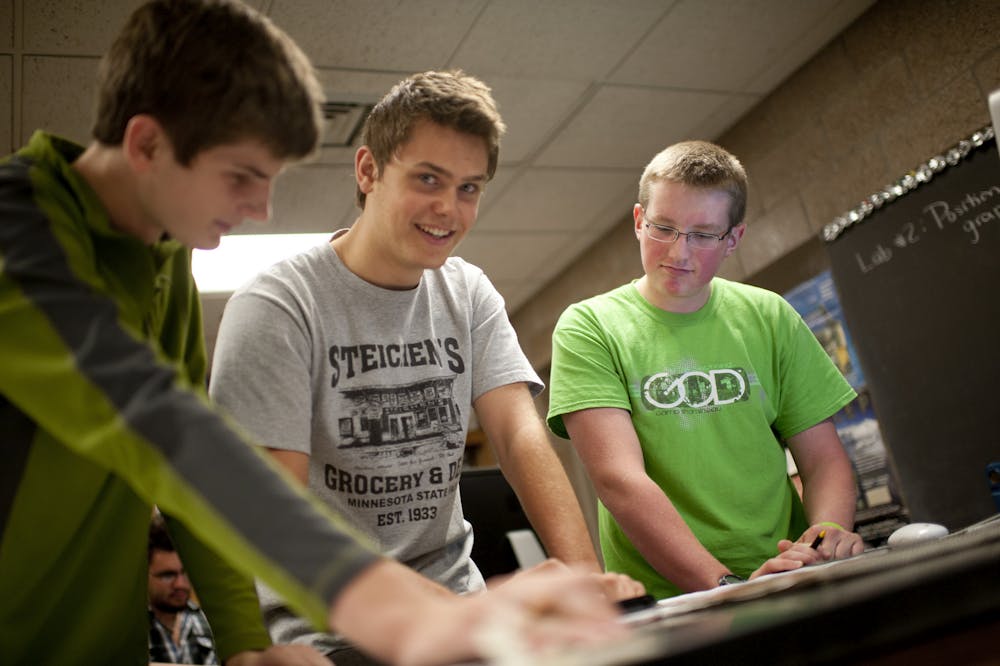
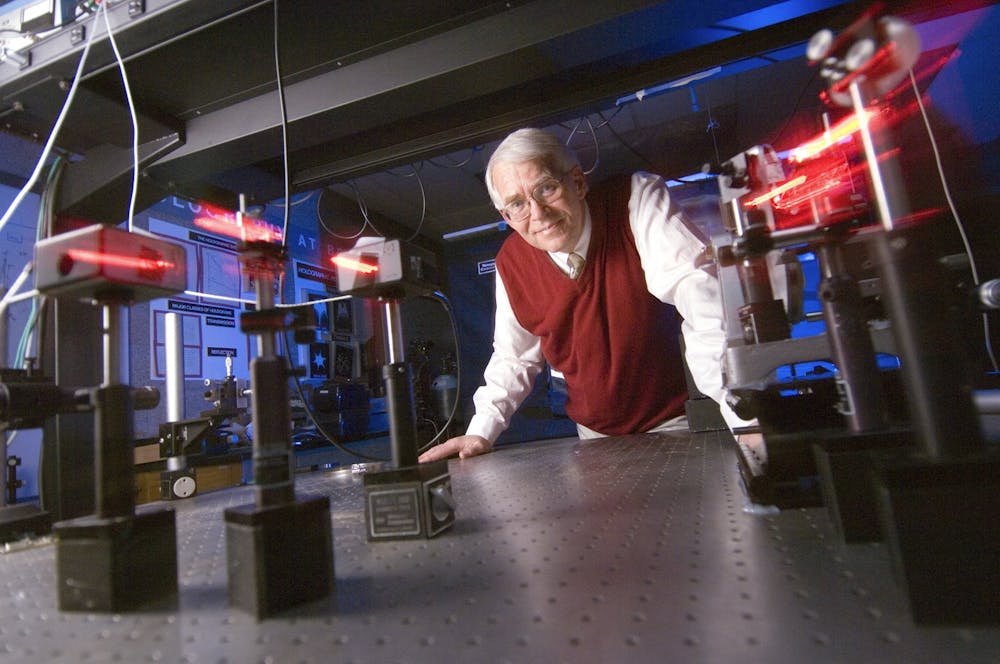
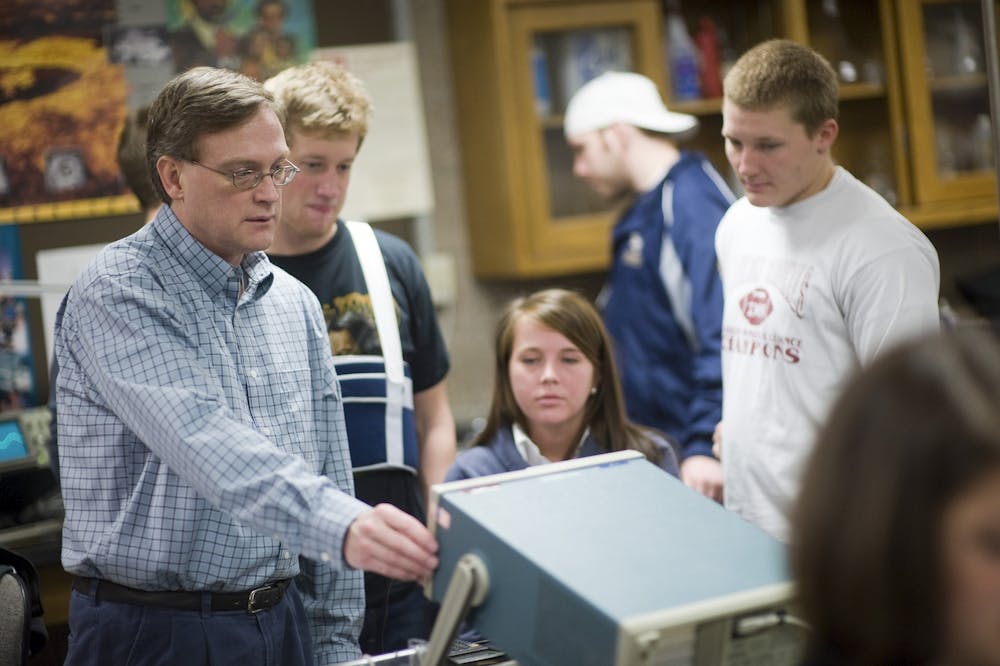
Bethel has one of the largest undergraduate physics and engineering programs in the nation. It's about cutting-edge research, collaboration with distinguished professors, open-ended projects that challenge you to discover new solutions, highly-successful graduates, and an active science community within a Christian learning environment. It's about taking our faith in Christ and integrating it into everything we learn, into everything we do, so we can accomplish incredible things–in our careers, in our communities, and in our world.
Loading Gallery...
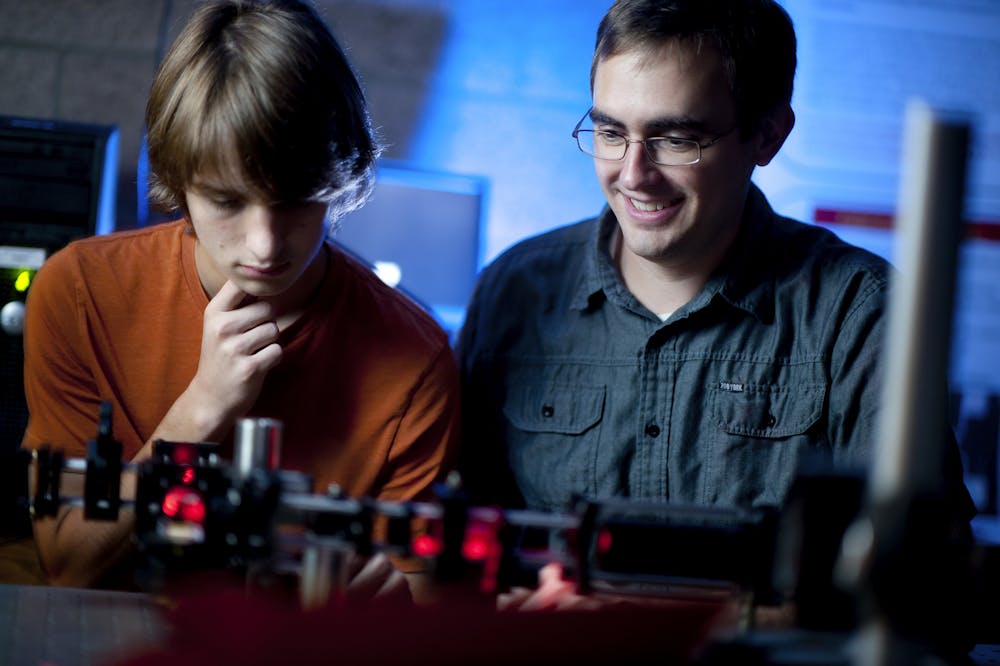
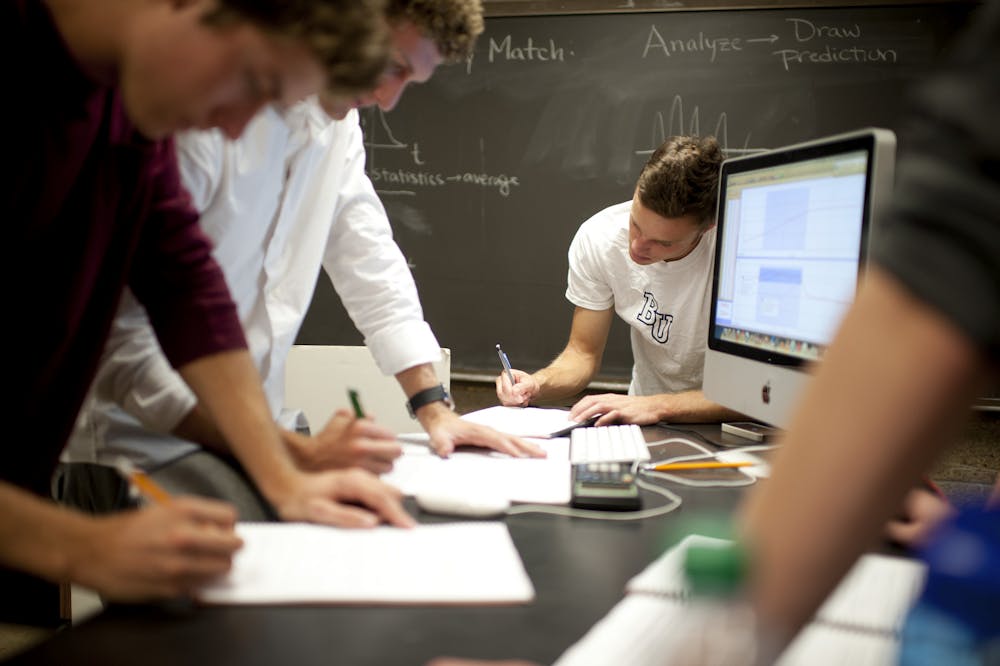
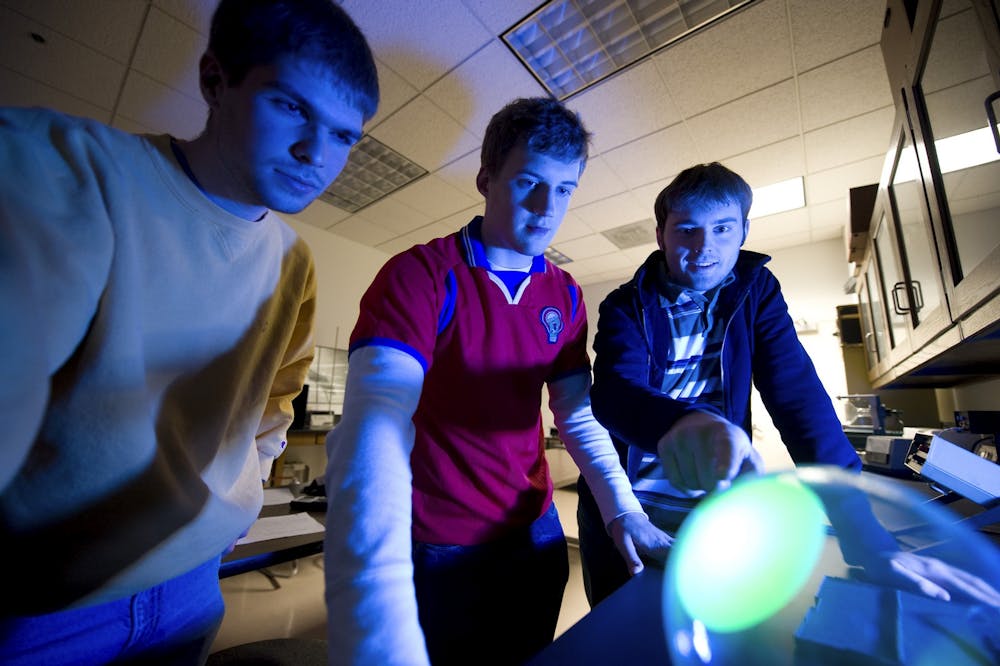

73
student co-authors on papers published since 2016
$84,983
average salary for physics alumni 10 years after graduation
- U.S. Census BureauProgram Highlights
Engineering major and other options
Students who desire a strong liberal arts and science background can pursue engineering through one of Bethel's excellent standalone engineering programs, or through the B.A./B.S. Dual-Degree Engineering program, which typically involves 3 years at Bethel and 2 years at another university with a specialized, accredited engineering program. Graduates have also gone on to M.S. or Ph.D. engineering programs after receiving a degree in physics at Bethel.
Facilities
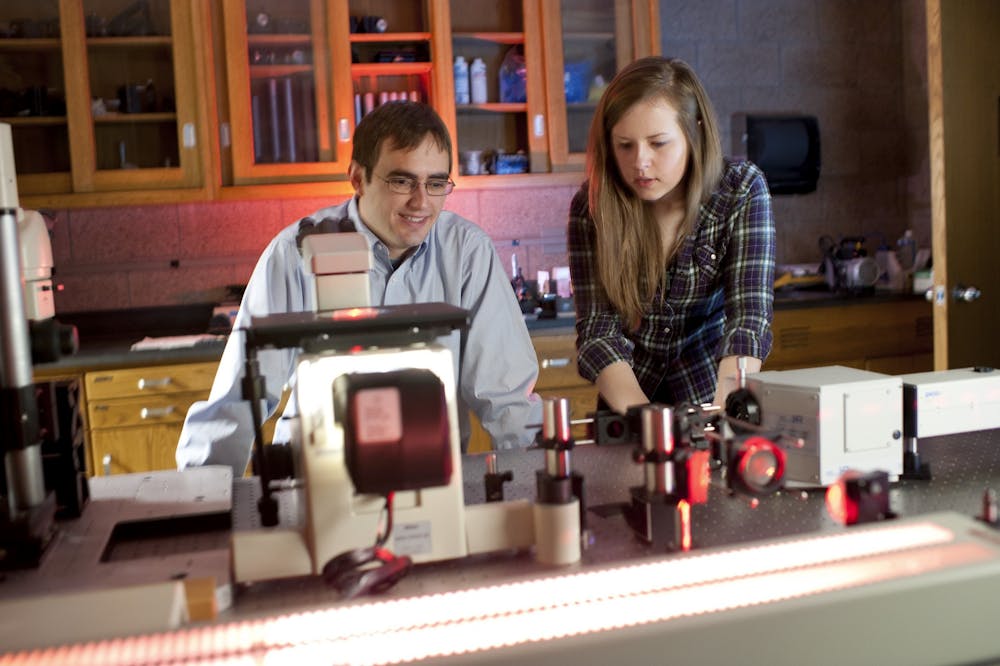
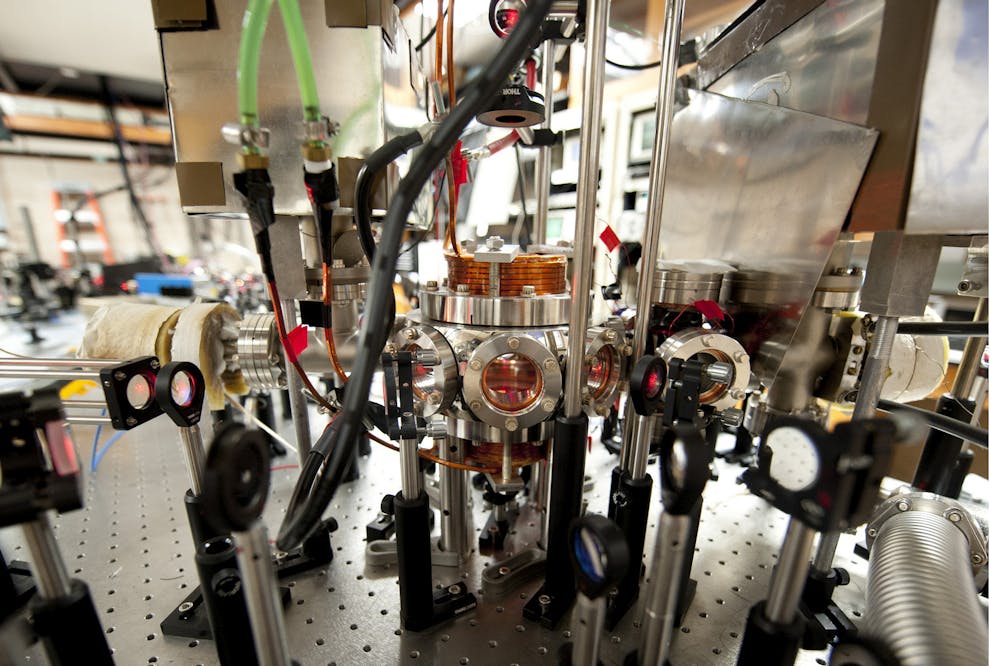
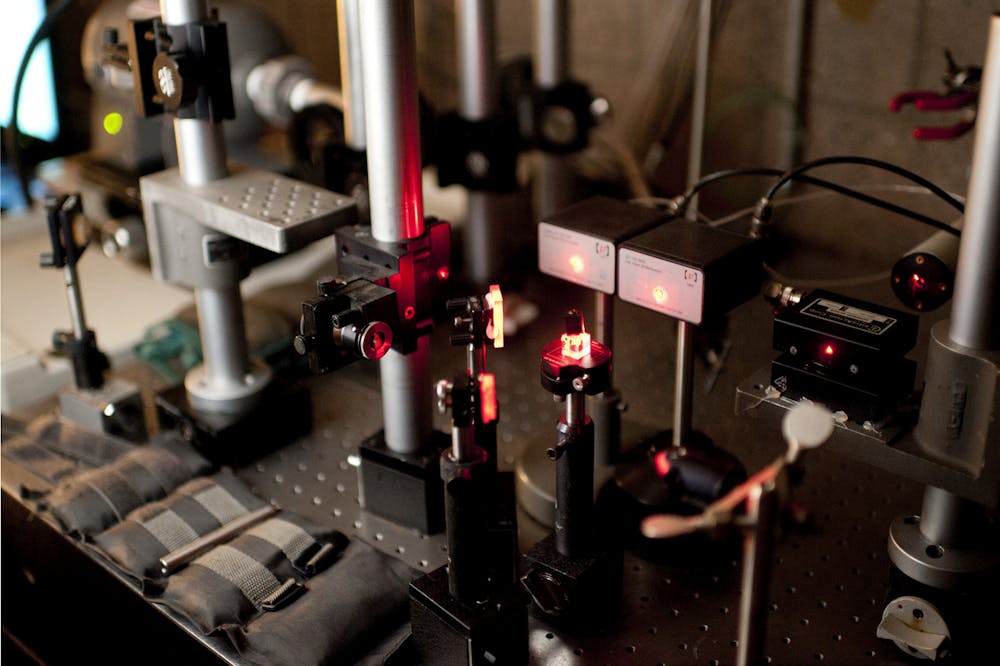
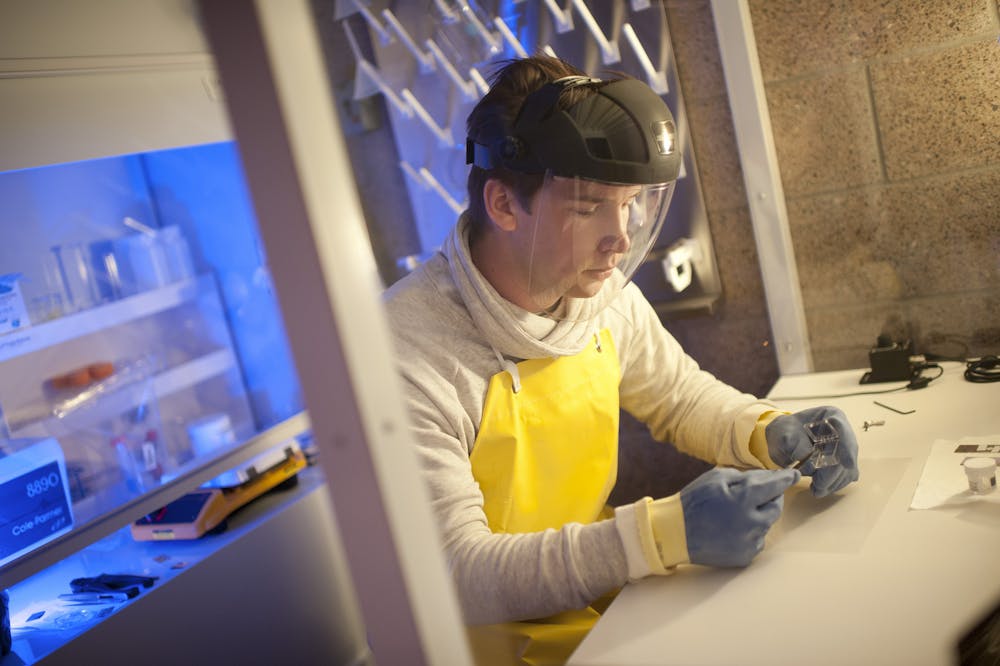
Our state-of-the-art research laboratories were completely redesigned and expanded in 2017. Our labs are particularly well-equipped in the areas of modern optics, atomic and molecular physics, electronics, laser physics, nanotechnology, and fluid dynamics.
Research
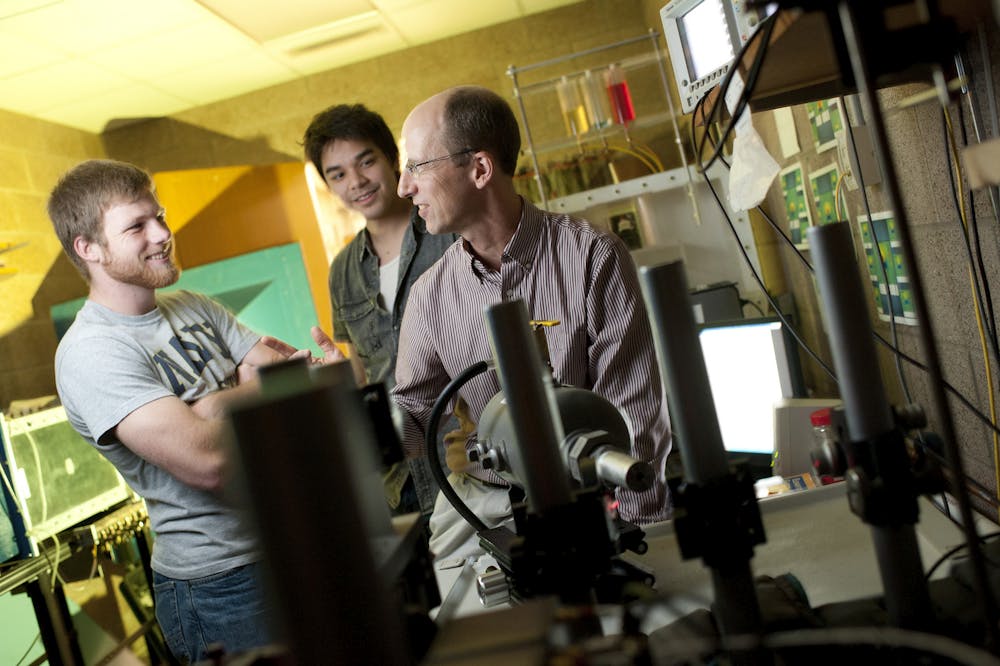
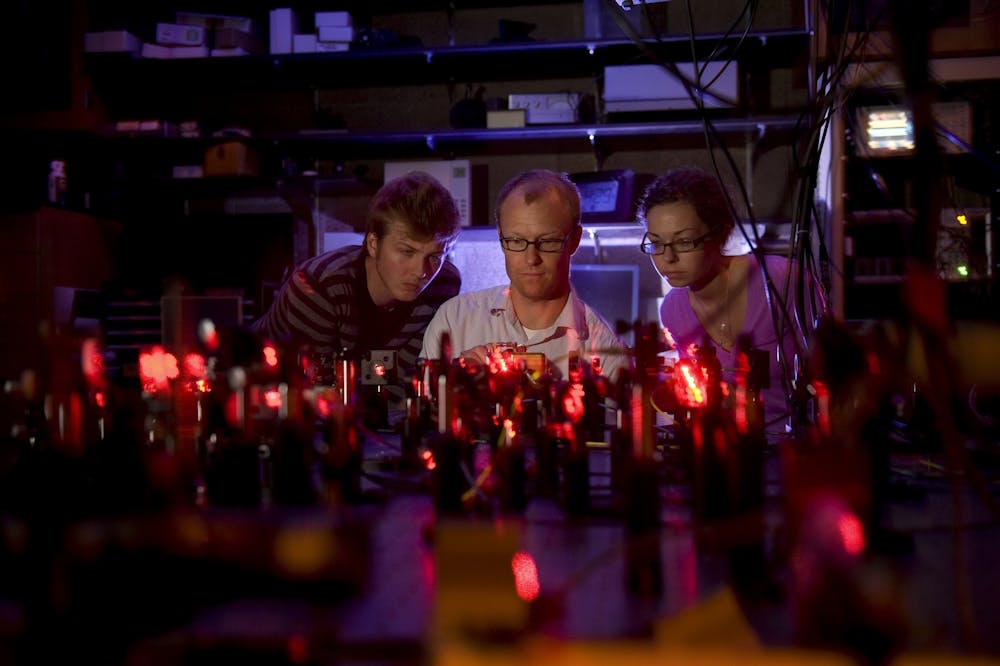
Collaborate with professors on applied research projects, publish in top scientific journals, and present your findings at local or national conferences.
Graduate School Success
Many of our alumni enter graduate or medical school after earning their degree from Bethel. Virtually all of our alumni received full financial support for their graduate work.
Internships
Our students intern at a wide range of companies, government agencies, and universities–including such prestigious organizations as CERN (Switzerland), MIT, Medtronic, TASER Inc., NIST, Honeywell, Argonne National Lab, Michigan State Univ., 3M, Cornell, United Launch Alliance (Delta rockets), NASA Goddard, Xcel Energy, and Columbia.
Scholarships
We offer scholarships to promising students each year, regardless of financial need. These financial gifts include the Gruez, Anderson, and Peterson scholarships, NASA's MN Space Grant, and the Edgar G. Johnson Memorial Scholarship.
Summer research experiences
We strongly encourage students to get experience during the summer months. Some work at Bethel as research assistants, but many do internships elsewhere. In the last several years, about 100 physics and engineering majors have been employed at over 3 dozen research sites throughout the country.
Teaching Assistantships
After their first year, nearly all successful students are given the opportunity to work as teaching assistants (TAs).
Alumni network
Our alumni come back to campus to connect with current students and offer advice. More importantly, they actively seek to hire our graduates.
Student community
Students are encouraged to join our local chapter of the Society of Physics Students and the Sigma Pi Sigma honorary society. Such cohesiveness builds a sense of unity among the students and faculty, providing a strong, supportive community of mentors and peers.

The beauty of physics-based education is that it forces the student to learn how to think, to understand, and to solve problems. I don't believe a career exists in which the ability to solve problems effectively is not one of the most valuable assets a person can have. If this is true, then studying physics is one of the best ways to prepare for ANY career, technical or not.
Aaron Montello '06Operations Manager, Prima Power Laserdyne
Since 2007, I've had the privilege of advising six Bethel students in our Ph.D. program at the University of Minnesota. They are smart, hard-working, creative, and possess unusually broad and sophisticated skills in experimental physics and optics.
Sang-Hyun OhProfessor and Sanford P. Bordeau Chair, University of Minnesota
Bethel’s Physics alumni now make up a strong core of our measurement and automation team. Beyond their obvious technical abilities, they demonstrate the character of Christ in their endeavors, which above all is valued. I wish to express my gratitude for your teaching and referrals of such excellent people.
David DikkenCurrent job: CEO, MTL Corporation

Bethel served as a launchpad for me to eventually discover my purpose in Jesus' kingdom, which includes my career as a budding entrepreneur founding Laminera, as well as how I've evolved in my faith and integrated the two.
Lauren Otto '12Founder and CEO of Laminera

The strong foundation I was given by Bethel's physics department provided me with all the tools I needed to succeed in my graduate school career in electrical and biomedical engineering.
Daniel Klemme '13University of Minnesota
People get the idea that Christianity is anti-science, when that is not true at all. As a Christian physicist, my job is an opportunity to discover the amazing mind of God and how He so intricately orchestrated the universe to work-and also made it so that we could discover it for ourselves.
Laura King-Steen '08Icing Cloud Calibration Engineer, HX5 Sierra at NASA's Glenn Research Center
What can I do with a physics or engineering degree?
Physics and engineering students are well prepared for professional careers in many different industries and have an exceptional history of success in graduate school.
Careers
Career fields of physics and engineering graduates:
- Astronomy
- Computer programming
- Crime or forensics
- Engineering (Aerospace, Biomedical, Civil, Computer, Electrical, Geological, Mechanical)
- Forestry
- High school physics education
- Lab technician
- Mathematics or statistics
- Medical technology
- Medical imaging
- Medicine
- Nuclear lab technician
- Optical device design
- Physicist
- Professor
- Science research
- Structural design (e.g., stadiums, bridges, amusement park rides)
- Technical writing or illustration
Graduate Schools
Graduate schools our physics and engineering alumni attend:
- Stanford
- Minnesota
- Colorado, Boulder
- New Mexico
- Purdue
- Illinois
- Ohio State
- Yale
- Harvard
- University of Michigan
The majority of our graduates receive full financial support (stipend and tuition) in the form of fellowships, teaching assistantships, or research assistantships.
Graduate Fields
Graduate fields our alumni go into:
- Physics
- Mechanical engineering
- Biomedical engineering
- Electrical engineering
- Industrial engineering
- Civil or structural engineering
- Statistics
- Chemistry
- Math
- Cognitive science
- Nanotechnology
- Computer science
- Medicine
- Business law